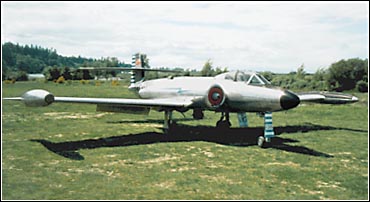
Avro CF-100 Canuck Mk. 3B
Known as the "Clunk" the CF-100 was the first 100% Canadian designed and built all-weather interceptor and first flew in January 1950.
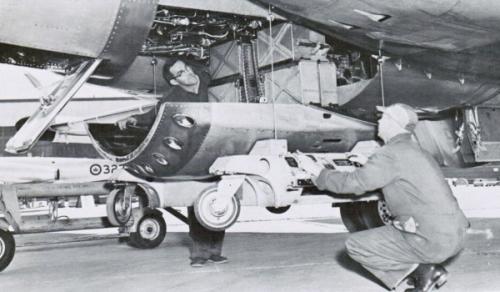
The Mk 3 differs from the operational Mk 4 mainly in having the pointed nose cone, and having the lower-powered Orenda 8, of 6,000 lb. thrust. It was armed with an eight .50 cal. machine gun pack. Once the Mk 4 became available in 1954, most of the remaining Mk 3's were either used at the Operational Training Units or converted to dual control trainers.
Many innovations in radar and quick-change weapons were developed on the CF-100, and some of its design features were incorporated in the Avro Arrow.
RCAF 18138 was one of 56 converted in 1955 from Mk 3B to Mk 3D dual trainers. It saw service with No. 440 Bat Sqn. (Bagotville) and 445 Sqn (Uplands), as well as with No. 3 AW(F)OTU at North Bay.
18138 was struck off RCAF strength in May of 1963, and used at the British Columbia Institute of Technology Aviation Campus at Vancouver International Airport for training of aircraft maintenance students.
The big fighter was kept in running condition and used for engine run-ups. It was then donated by BCIT to CMF, and towed out to Surrey in 1987. Unfortunately, the wings, tip tanks, rear fuselage and tail assembly had been sent off to a junk dealer, so CMF had to purchase a replacement set. The aircraft is virtually complete, except for the gun pack.
Technical Details:
Serial 38, RCAF 18138
Manufactured: 1953
Engines: Two Orenda 8, 6000 lb thrust axial flow gas turbine
Maximum speed: Mach .85
Empty weight: 23,000 lb (10 432 kg)
Maximum weight: 34,000 lb (15,436 kg)
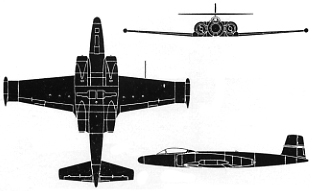
Span: 57 ft 6 in (17.5 m) over tip tanks
Length: 52 ft 3 in (15.9 m)
Height: 14 ft 6 in (4.4 m)
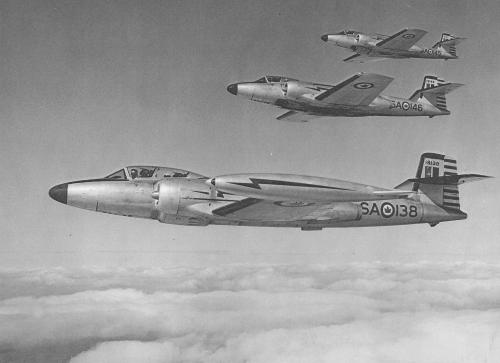
The Museum's CF-100 Mk. 3 18138 in operational service with the RCAF.
